

Reload Raises $2.275M and Launches Epic to Manage AI Agents’ Memory
February 20, 2026
Lagos Tech Fest 2026 Puts Nigeria’s Innovation Drive on the Global Stage
February 24, 202610 Black STEM Pioneers Who Changed the World (and Don’t Get Enough Credit)
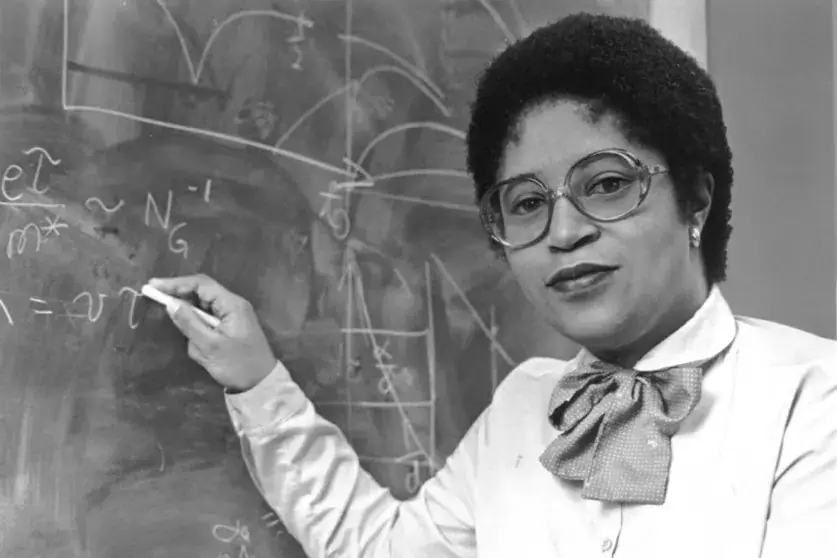
From spaceflight calculations to the building blocks of modern computing, Black innovators have powered the tech we rely on every day. Yet too often, bias and exclusion pushed these names to the margins — even when the work was foundational. This Black History Month, UrbanGeekz is honoring 10 under-celebrated pioneers whose breakthroughs helped shape the modern world..
Katherine Johnson
Katherine Johnson was extraordinary from an early age. Born in West Virginia, she excelled academically and began high school at just 10 years old. In 1939, Johnson became one of three Black students, and the first Black woman, to integrate West Virginia University, enrolling in the graduate mathematics programme. She later left to raise her three children with her husband, James Gobel.

Katherine Johnson, the NASA mathematician whose orbital calculations helped send astronauts to the Moon
In 1953, Johnson joined the National Advisory Committee for Aeronautics (NACA), which later became NASA. Her mathematical brilliance would reshape space travel. In 1961, she calculated the flight trajectory for Alan Shepard, the first American in space, entirely by hand. Even after NASA adopted IBM computers, astronaut John Glenn refused to fly until Johnson personally verified the calculations.
Related Post: UrbanGeekz team at the Africa Tech Festival
Her impact didn’t stop there. Johnson’s work was central to the success of the Apollo Moon landing programme, helping propel the U.S. forward in the Space Race. She contributed to five additional Apollo missions, including early trajectory work for Mars, co-authored 25 research papers, and worked on the first American space station. Johnson retired in 1986, leaving behind a legacy that quite literally reached the stars.
Dr. Mark Dean
A Tennessee native, Mark Dean was both a star athlete and a straight-A student in high school. He studied electrical engineering at the University of Tennessee, graduating at the top of his class in 1979 before joining IBM.
At IBM, Dean co-created the Industry Standard Architecture (ISA) system bus alongside Dennis Moeller. This breakthrough allowed personal computers to connect to external devices like printers, modems, monitors, and memory drives, fundamentally changing how PCs functioned and accelerating their adoption by consumers.
Dean completed graduate school at Florida Atlantic University in 1982 and, at just 25 years old, was appointed head of all PC design at IBM. He helped design IBM’s first personal computer and holds three of the nine core patents tied directly to it.
Related Post: 7 Women Changemakers Making Waves in STEM and Tech
In 1999, Dean led the development of the world’s first gigahertz processor, enabling computers to perform one billion calculations per second. This innovation transformed data processing and cemented Dean’s place as one of the most influential engineers in modern computing history.
Dr. Marian Croak
Skype. WhatsApp calls. Google Meets. Zoom. All modern internet calling relies on technology pioneered by Dr. Marian Croak.
Born in New York in 1955, Croak developed an early fascination with the technicians and engineers who fixed things in her home. She earned her undergraduate degree from Princeton and a PhD from the University of Southern California before joining AT&T Bell Labs in 1982.
At AT&T, Croak led groundbreaking research on transmitting voice over the internet rather than phone lines. In the early 1990s, she spearheaded the development of Voice over Internet Protocol (VoIP), transforming voice into digital signals that could travel online, laying the foundation for internet calling as we know it.
Following Hurricane Katrina in 2005, Croak helped pioneer text-to-donate technology, enabling rapid charitable giving. This system famously raised $43 million for Haiti earthquake relief in 2010. Before leaving AT&T in 2014, she served as Senior Vice President, overseeing over 2,000 scientists and 500 programmes. Today, Croak is Vice President of Engineering at Google and holds more than 200 patents.
Dr. Philip Emeagwali
Every time you run a Google search, you’re benefiting from Dr. Philip Emeagwali’s work.
Born in Nigeria in 1954, Emeagwali left high school at 14 when his family could no longer afford school fees. His father continued teaching him at home, and growing up during the Biafran Civil War, Emeagwali understood that education was his path forward.
At 17, he earned a scholarship to Oregon State University, completing a Bachelor of Science in Mathematics. He later obtained two master’s degrees from George Washington University and a PhD in Scientific Computing from the University of Michigan.
While working in the oil industry, Emeagwali sought faster ways to model oil reservoirs. Inspired by the collective intelligence of bees, he proposed using thousands of processors simultaneously rather than relying on individual supercomputers. In 1989, he connected 60,000 microprocessors, achieving 3.1 billion calculations per second. This was the fastest anyone had been able to achieve, yet the fastest at the time. His work became foundational to modern parallel computing and directly influenced the development of the internet and search engine technology.
Dr. Shirley Jackson
Shirley Jackson made history as the first Black woman to earn a PhD from MIT. As a trailblazer she was committed to opening the doors for the black people who came after her.
Born in Washington, D.C. in 1946, Jackson showed early scientific curiosity, conducting experiments as a child, once even studying honeybee eating habits. She entered MIT in 1964 and completed her bachelor’s, master’s, and doctoral degrees in theoretical physics.
Committed to equity in education, Jackson founded MIT’s first Black Students Union. Within one year, Black student enrollment grew from just two students to 57.
At AT&T Bell Labs, Jackson’s research helped lay the groundwork for technologies including fibre-optic cables, touch-tone telephones, fax machines, solar cells, caller ID, and call-waiting. Her work on electron interactions led to her election as a Fellow of the American Physical Society.
Beyond research, Jackson served on the Nuclear Regulatory Commission and later became president of Rensselaer Polytechnic Institute. Her career stands as a powerful example of scientific excellence paired with structural change.
Related Post: Dr. Marshall Shepherd: humble beginnings to renowned climate scientist
Otis Boykin
Need to turn on your TV, computer or radio? Boykin created the technology that many of the innovators on this list relied on: the electrical resistor.
Born in Texas in 1920, Boykin graduated as valedictorian of Booker T. Washington High School in 1938 before earning a scholarship to Fisk University, where he studied physics and mathematics. He later worked as a lab assistant testing control units for radio and television systems.
Though financial barriers forced him to leave graduate school at the Illinois Institute of Technology, Boykin founded Boykin-Furth Inc., where he continued researching electrical resistors, components that regulate electrical current to ensure safety and reliability.
In 1959, Boykin patented a wire precision resistor that allowed precise current control. Two years later, he improved the design to withstand extreme temperature and pressure changes, making the resistors more affordable and durable. These innovations were used in devices ranging from IBM computers to household electronics.
Over his career, Boykin earned 25 patents, including a control unit for pacemakers that simulated the human heartbeat, technology that has saved millions of lives worldwide.
Gladys West
Every time you open Google Maps, you’re using technology made possible by Gladys West.
Born in 1930, Virginia was still segregated, and both of West’s parents were sharecroppers. Determined to build a different future, she graduated as valedictorian and earned a scholarship to Virginia State College, where she completed bachelor’s and master’s degrees in mathematics.
After teaching in segregated schools, West joined the U.S. Naval Proving Ground as a mathematician. She was their fourth black hire. Her work involved hundreds of hours of programming calculations and often checking the computer output for errors by hand.
In 1978, West became project manager for the Seastat satellite programme and later led research for GEOSTAT. Her mathematical modelling of Earth’s shape made it possible to develop the Global Positioning System (GPS), allowing precise location tracking anywhere on the planet. West’s work quietly reshaped global navigation forever.
Granville T. Woods
Granville T. Woods is famously known as the “Black Edison” with nearly 60 patents to that shaped communication and transportation.
Born in Ohio in 1856, Woods largely educated himself while working in railroad machine shops and steel mills. Barred from formal education, he borrowed library books through friends and taught himself engineering and electricity.
When he moved to New York in 1876, Woods realized his enormous potential in engineering. It was here that he developed his first invention: the telegraphony. This technology combined the features of the telephone and the telegraph, which allowed operators to send and receive messages much quicker than before. When Alexander Bell bought his invention, it gave Woods the finances to become a full-time inventor.
Next, he invented the multiplex telegraph, which enabled dispatchers to locate trains and also allowed moving trains to communicate via telegraph. This invention was so revolutionary that Woods found himself in court fighting patent suits against Thomas Edison himself. Woods won the case and, with his brother, started the Woods Railway Telegraph Company in 1884.
Related Post: UK-Nigerian Scientists Contribute to Groundbreaking Diamond Battery Invention
Marie Van Brittan Brown
Some inventions are born out of necessity, much like the closed-circuit television (CCTv) security system that Marie Ban Brittan Brown and her husband invented in 1969.
Born in Queens, New York, in 1922, Brown initially worked as a nurse, coming home at late hours in a neighbourhood where crime was prevalent. Her husband, Albert Brown, worked as an electronics technician with irregular hours, often leaving Marie home alone at night. Afraid for her safety, Marie asked him to help her develop what became the first-ever home security system.
The system was made up of four peepholes, a sliding camera allowing footage of people at different heights, and a two-way microphone. This allowed her to see who was at the door, to communicate with them and then to remotely open the door from the press of a button. Lastly, the security system also included a button that would notify the police if pressed.
The couple applied for a patent in 1966 with the title “Home Security System Utilizing Television Surveillance.” Their invention paved the way for all modern security systems that are still in use today in banks, apartment buildings and office complexes.
James E. West
Nearly every microphone used today is powered by technology invented by Dr James E. West.
West was born in Virginia to his father and mother, Matilda West (one of the Hidden Figures), in 1931. They both encouraged him to take his education seriously. Growing up, West often dismantled things, curious to see their inner workings.
After serving in the Korean War, West switched from pre-med to physics at Temple University while interning at AT&T Bell Labs. He joined Bell Labs full-time in 1957, where he partnered with Gerhard Sessler to develop the electret microphone. Patented in 1962, it offered exceptional sound quality, reliability, and affordability, quickly becoming the global standard.
Beyond invention, West championed diversity in science. Through programmes like the Cooperative Research Fellowship Program, he helped more than 500 students who were people of color earn degrees in science, engineering, and mathematics, ensuring innovation looked more like the world it served.