

Lagos Tech Fest 2026 Puts Nigeria’s Innovation Drive on the Global Stage
February 24, 2026
Jack Dorsey, original co-founder of Twitter (now X), has been revolutionising technology and communication for the last two decades.
Last year, he unveiled his newest project: Bitchat, a decentralized, peer-to-peer messaging app that works offline, without a mobile signal. Bitchat, alongside Bluesky, signals the tech billionaire’s shift towards creating open-source technologies that aim to return power to users.
The Story of Jack Dorsey
Dorsey is most famously known for co-founding Twitter in 2006, helping pioneer instant, short-form communication. He served as Twitter’s CEO twice before stepping down in 2021.
He later moved into fintech, co-founding Square (now Block), which developed technology that enables small businesses to accept credit card payments via smartphones. Square rebranded as Block to signal a broader focus, including Bitcoin—something Dorsey has described as a foundational technology that can reduce reliance on traditional, centralized banking systems.
Another notable innovation of Dorsey’s is Bluesky, which Twitter initially launched as a research project in 2019. The goal was to create a social media platform where users could control how content is shared and moderated. When Elon Musk acquired Twitter, Bluesky became an independent Public Benefit Corporation (PBC) in 2021 and was launched for public use in 2024.
Unlike X or Instagram, no single corporation controls Bluesky. Instead, it is a decentralized social network built on the open-source Authenticated Transfer Protocol (AT Protocol). This allows users to own their identity and choose their server. Rather than relying on one central algorithm, users can select from a marketplace of algorithms or build their own. The open-source framework also allows public inspection of the system, reducing the risk of hidden biases.
Related posts: Twitter CEO talks Ferguson, Diversity, and Career Milestones at Platform Summit
What is Bitchat and How Does it Work?
With a desire to evolve communication technology and reduce the reliance on centralized systems, Dorsey designed Bitchat. He described the app as a “weekend project” that he coded using Goose, an open-source AI assistant developed by Block. Bitchat became available for beta testing in July 2025, with users eager to test-run Dorsey’s latest experiment.
Upon downloading and installing Bitchat, users immediately notice how it differs from traditional messaging apps: it requires no registration. It does not store email addresses or passwords on a centralized server. The application allows users who are physically near one another to communicate without accessing the internet or cellular signals. Additionally, messages sent using Bitchat are ephemeral, existing only on the devices from which they are sent.
Bitchat uses Bluetooth Low Energy (BLE) technology, much like the Apple AirTag. Every phone running Bitchat acts as a small router, a node in the network that can send and receive messages, as well as relay messages to other nearby phones. Devices must be within direct Bluetooth range (roughly 30 feet) of another device running Bitchat so messages can “hop” from one phone to another until they reach the intended recipient.
For Bitchat to become a truly functional messaging system, it would require widespread adoption.
When adopted by groups of people, Bitchat could be used during crowded events, such as concerts or festivals, where cellular networks are overloaded. In areas without reliable internet connections, communities could use Bitchat to share updates and communicate locally. Additionally, in the event of a disaster that disrupts internet or cellular connectivity, neighbors could use Bitchat to coordinate rescue efforts or distribute resources.
Security Concerns
Shortly after it was released, Dorsey included a warning to Bitchat’s GitHub page:
“This software has not received an external security review and may contain vulnerabilities and does not necessarily meet its stated security goals. Do not use it for production use, and do not rely on its security whatsoever until it has been reviewed.”
Bitchat uses the Noise Handshake Protocol, a modern cryptographic protocol that allows two users to establish an encrypted connection without revealing their identities to outside observers. Unlike traditional key exchanges, both parties authenticate each other during the handshake, and their identities are encrypted from the start. The result is a secure channel with forward secrecy, meaning even if keys are compromised later, past messages remain protected.
However, security researcher Alex Radocea has challenged the notion that Bitchat’s use of the Noise Protocol equates to real-world security. “There’s essentially no trust/auth built in today,” He wrote. The protocol’s identity keys, as implemented, do not provide cryptographic verification of contacts. This leaves the app vulnerable to trivial impersonation attacks despite the Noise-based handshake.
Open Source and Ever Evolving
It is clear that Bitchat still needs further development before fully resolving its security issues. However, one redeeming feature is that Bitchat is completely open source. This means anyone can download the original code from GitHub and make independent adjustments to improve the app.
Related posts: Jack Dorsey-Backed African Bitcoin VC Firm Recursive Capital Closes Fund I
External contributors have already begun proposing security patches and enhancements to strengthen privacy protections and improve the app’s overall resilience. In open-source technology systems, flaws are visible to everyone. But this means transparency can accelerate iteration.
Is Decentralized Technology the Technology of the Future?
Dorsey has increasingly positioned himself around anti-platform infrastructure, decentralization, and open cryptographic systems. He constantly innovates and experiments with existing technology, determined to create the next best thing.
Bitchat may not replace WhatsApp or Signal anytime soon. Its Bluetooth-only range and unresolved security questions make scaling unlikely in the short term. However, the curiosity towards and small-scale adoption of technology like Bitchat signals a growing appetite for decentralized, local communication that is structurally more difficult to shut down.
As social media platforms face growing distrust and internet shutdowns become increasingly common, decentralized platforms offer alternative communication systems.
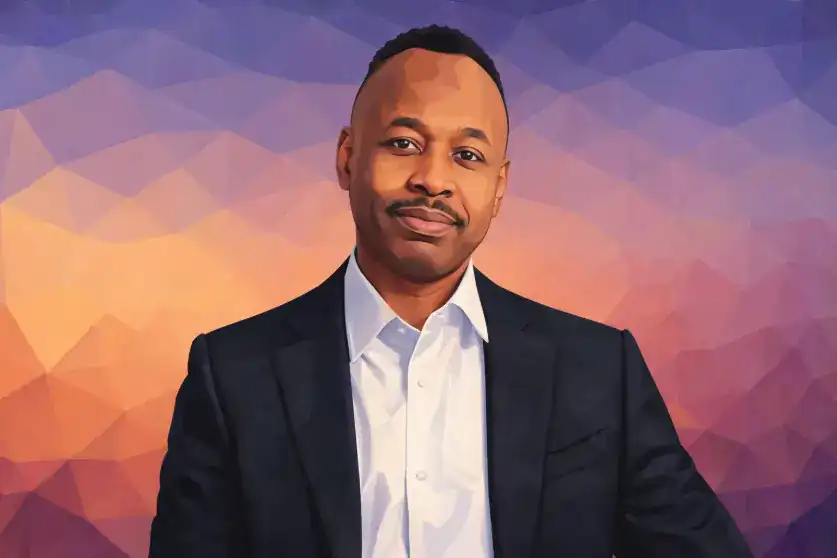
Jack Dorsey Image: Flickr/TED Conference