

MIT Grad Raises $2M For Video-First Professional Profiles Platform
March 12, 2026“My Father’s Shadow” Film Review: A Raw Portrait of Family, Masculinity and Nigeria
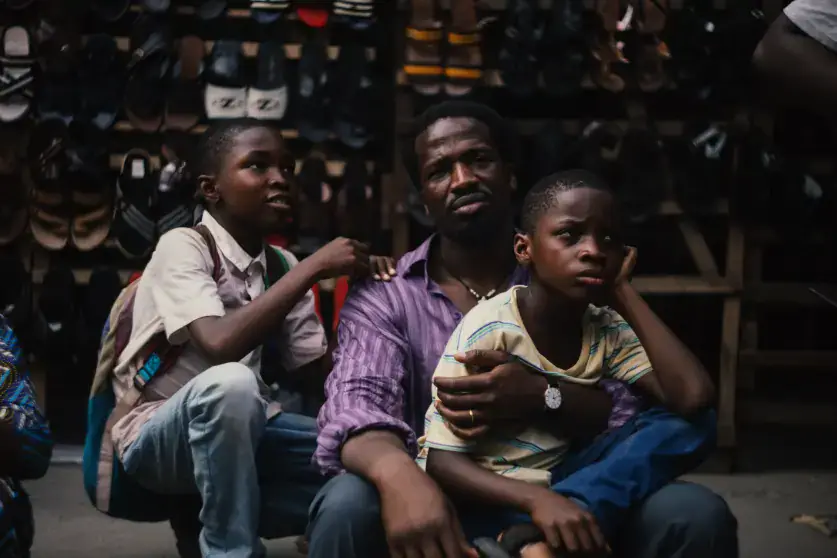
Directed by Akinola Davies Jr and co-written by his brother Wale Davies, “My Father’s Shadow” is a raw and deeply personal portrait of Nigeria. Set in 1993, on the eve of a historical election, the film joins a father, estranged from his sons, on a day trip through Lagos.
The film explores the themes of masculinity, family, and sacrifice from the perspective of two young brothers. As the day progresses, the strain of their father’s absence on their family becomes increasingly evident – so does the unfolding democratic crisis in Nigeria.
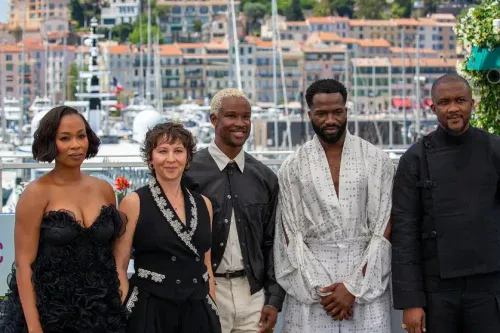
“My Father’s Shadow” has captivated audiences worldwide, making history as the first Nigerian film to appear at the Cannes Film Festival in 2025. It has since won a BAFTA for Outstanding Debut and shows no signs of slowing down.
Related Post: Nigerian-British Film ‘My Father’s Shadow’ Wins BAFTA for Outstanding Debut
Lagos on the Big Screen
When filming in Lagos, the team wanted to keep it as authentic as possible. The scenes switch from moments of action to scenes of observation. Shots of birds circling in the sky, bougainvillea dancing in the wind, cows lounging on the side of the road. Even the way the telephone lines and buildings were captured made the whole city look like art.
This is contrasted with the busyness of the city. A bustling market overflows with hawkers and food vendors sheltering under umbrellas from the sweltering sun. An Okada (motorbike) rushes by, threatening to run over the two brothers.
Shot on 16mm film with a handheld camera, the footage has a nostalgic, home-movie quality reminiscent of the 1990s. The clips are quick and stitched together, evoking the restlessness of Lagos itself.
What stood out to us most was the way the film expertly captured the Lagosian characters. It would have been easy to glance past the many people the family encounters. Instead, the camera lingers, offering close-up glimpses into the world of otherwise silent characters. Subtle and delicate moments that tell stories that words could not adequately capture.
“I actually want to create a love letter to the place. In the film, Lagos is a living, breathing character with its own detail,” Wale elaborated.
Related post: The Ultimate Review of the Southern Gothic Horror Blockbuster, ‘Sinners’
The Intimacy of Brotherhood
Oluremi (Chibuike Marvellous Egbo) and Akinola (Godwin Egbo) are brothers off-screen, and their chemistry is unquestionable. The brothers bicker, they fight, they poke fun at one another with a natural ease. But as tensions rise, Remi becomes increasingly aware of his role to protect his younger brother.
Their childhood antics take center stage and offer moments of comedic relief. Our favourite being when Akin gets into a winking match with an older man sitting in a car beside them. Neither brother has been to Lagos before, and they absorb everything around them with equal parts curiosity and apprehension. Their childlike sense of wonder, moments of agitation, and vulnerability with their father are refreshingly adolescent.
My Father’s Shadow Trailer
Political Backdrop
From the very start of the film, the Nigerian military is omnipresent. We hear news about them on the radio in the minibus and see the newspapers with the headlines in bold in passing. Most notably of all, we see an army truck filled with armed soldiers in green uniforms driving by.
The city has been affected by political instability. Rising prices for public transportation, fuel shortages, and unpaid wages for the father all indicate a deeper economic problem.
“Nevertheless, this isn’t really a political film. It’s about the grave rippling effects an authoritarian regime can have on a family living under it,” film reviewer Robert Daniels commented.
Rewriting the Nigerian Father
In a scene with his oldest son, Fola explains how he was always taught that being a man meant providing for and protecting his family. He would make sure there was always food to eat in the house, even if it meant spending days away from home.
“Folarin probably represents the archetypal Nigerian man and father – someone who is charismatic and charming but who is also hardworking and has a sense of obligation to his family,” Akinola explained.
Related post: 6 Black Directors Reshaping Hollywood From Indie Classics to Billion-Dollar Franchises
Fola projects a vision of strength and determination. Yet in the same monologue, he breaks down crying, overcome with emotion as he must explain to his son the sacrifices he makes for their family. He doesn’t hide his tears. In doing so, he implicitly teaches his son that masculinity can also mean vulnerability. The Davies brothers shift the stereotype of African fathers as hardened and unyielding, creating space for multidimensionality.
“To tell a story as tender, beautiful, and considered as this one, is an opportunity that not a lot of actors get in their careers,” Sopé Dìrísù, who plays Folarin, said.
Folarin’s tenderness is always present in the way he holds his son’s hand, strokes their head, and answers their every question.

Real, Raw, and Recognizable
While set in Lagos, the film contains many elements that might ring true for Africans across the continent and those in the Diaspora. The brothers bathe using a bucket of water. Their minibus runs out of fuel mid-journey. They receive hugs from an “uncle” they’ve never met before. Street football is played barefoot with a ball aged by time and use. Then NEPA (National Electric Power Authority) cuts the electricity in the middle of the day while they’re eating in a restaurant.
Each scene is unglamourised and specific. Together, they paint a portrait of everyday African life that feels like archival memory.
“My Father’s Shadow” is a memorable, heartfelt piece of cinema that will leave you reflecting long after the credits roll. Bold, poetic, and celebratory, the Davies brothers have truly ushered in the next generation of African cinema.