Kaiser Nurses Warn AI Monitoring Could Harm Patient Care
October 21, 2026
The prevalence of plastics isn’t new. Since World War II, mass-produced plastics have spread across the globe. They now litter sidewalks, oceans, and other environments. However, in more recent years, scientists have also started researching the effects these plastics have on human bodies, not just the planet. Many plastics persist in the environment. Over time, they break down into smaller particles
A steady stream of headlines about microplastics has continued to raise concerns about the potential effects on health. A 2024 study examined patients undergoing carotid artery surgery. Researchers linked plastic particles in artery plaque to later heart attacks, strokes, or death. However, the findings do not prove that the particles caused these outcomes. The American Cancer Society stops short of drawing a direct line between microplastics and cancers, but a small 2024 study did find a higher concentration of these particles in prostate tumors compared to surrounding noncancerous tissue.
While people can’t completely eliminate microplastics from our environment, they can reduce their own exposure. Culligan discusses how proactive steps can help, including reducing household dust, shifting to glass food storage containers, and installing drinking water filtration systems certified to reduce microplastics.
Why microplastics are a growing priority
Microplastics are plastic particles that are smaller than 5 millimeters (about the width of a peppercorn), with many too small to see. Nanoplastics are even smaller, generally measuring less than 1 micrometer, and are invisible to the naked eye.
Larger plastic products, such as soda bottles, synthetic fabrics, and food storage bags, release smaller particles as everyday wear, heat, and environmental exposure break them down
Some of the more common ways of exposure to microplastics include:
- Synthetic fabrics and household dust: Synthetic carpets, clothing, and furnishings can shed tiny plastic fibers. These particles can become airborne or settle into household dust, creating potential exposure through inhalation.
- Food containers and packaging: Some plastic containers can release tiny particles when heated. In a 2023 laboratory study, researchers found that microwaving certain containers released microplastics and nano plastics into the liquids used to simulate food.
- Bottled beverages: Plastic bottles containing water and other beverages can be sources of microplastics. Their caps and bottlenecks can shed particles through friction when repeatedly opened and closed. In a 2026 study, researchers measured significantly higher concentrations of micro- and nanoplastics in samples from six bottled-water brands than in treated water from four treatment plants
- Water sources: Runoff and wastewater can carry microplastics into rivers, lakes and other drinking-water sources. The amount that may remain in drinking water varies with the source and treatment process.
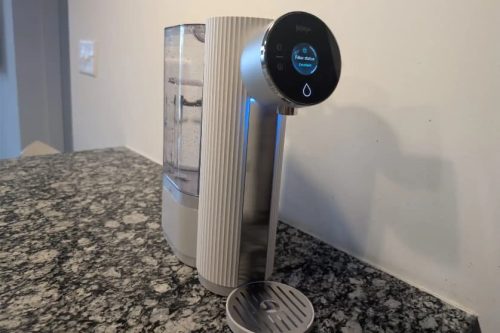
Related Post: Ninja’s HydraSense Puts Smart Filtration on the Countertop
How to reduce exposure to microplastics at home
As communities work to reduce microplastics in waterways, soil, and air, there are some simple ways to minimize exposure inside your home.
- Kitchen habits: Consider switching from plastic storage options to glass and stainless steel containers. Avoid warming food in plastic containers.
- Air and cleaning: Vacuum regularly, ideally with a HEPA-filter vacuum, and wipe surfaces with a damp cloth. A HEPA air cleaner can also help capture airborne particles.
- Drinking water: Choose a filtration system with a specific certification for microplastics reduction. Reverse osmosis systems are a common solution that can offer this.
How to choose a water filter for microplastics
There are several ways to filter your home’s drinking water, ranging from simple pitchers to more complex whole-home systems. However, filtration solutions vary broadly in terms of what water quality issues they are designed to address. For example, basic pitcher and refrigerator filters are generally designed to improve the taste of your drinking water, but their contaminant-reduction capabilities can vary by model. These should not be assumed to filter microplastics unless the model is specifically certified to do so.
When it comes to filtration, look for a system that is specifically designed and certified to address your specific contaminants of concern, such as microplastics, lead, or others. Reverse osmosis (RO) systems, for example, use pressure to push water through a semipermeable membrane and typically combine several stages of filtration. For homeowners looking for an additional layer of protection at the tap, an RO system certified to reduce microplastics is one option.
Related Post: How to Reduce Household Dust and Improve Indoor Air Quality
Reducing overall exposure
You can’t avoid microplastics entirely, but you can make thoughtful choices about the water you drink and the products you use every day. You can limit your exposure at home by using glass food storage containers, reducing single-use plastic bottles, and keeping household dust under control
Written by: Lauren Thomas for Culligan
This story was produced by Culligan and reviewed and distributed by Stacker.