

Robinhood Teams With Klutch Sports Group, Appoints Rich Paul As Strategic Brand Advisor
March 8, 2024
Kairos Capital Legal Advisors Launches Initiative to Support Black-Led VC Funds
March 13, 2024
Africa has long been viewed as a continent in crisis. Although challenges remain, the motherland is now a hotbed for innovation, creativity, and untapped opportunities.
The increased adoption of technology is changing the narrative, driving economic growth, and is a cause for optimism. Additionally, venture capitalists are betting on the continent because of its young population and large untapped market potential.
Still, it wasn’t too long ago that very few investors were willing to listen to pitches from Africa, but in recent years, VC funding has steadily increased. In fact, according to Partech, VC funding on the continent grew exponentially from $277 million in 2015 to $6.5 billion in 2022, representing 2,246% growth in seven years.
RELATED POST: URBANGEEKZ 50 AFRICA
This growth in funding has been fueled by internet penetration, smartphone adoption, and the increased number of tech-enabled startups leveraging technology.
One investor who spotted Africa’s potential early on is Maya Horgan Famodu. As far back as the early 2010s, Famodu had a strong sense of “FOMO” (fear of missing out) on the “revolution” of technology start-ups on the continent.
While speaking with CNBC, she said she has long been interested in the development of entrepreneurship in Africa. After her college degree, she joined JPMorgan Chase hoping that by working with such a big-name company she would be able to “redirect the (investment) machine for good.” Instead, Horgan Famodu says she ended up feeling as if she had become a “cog in the wheel.”
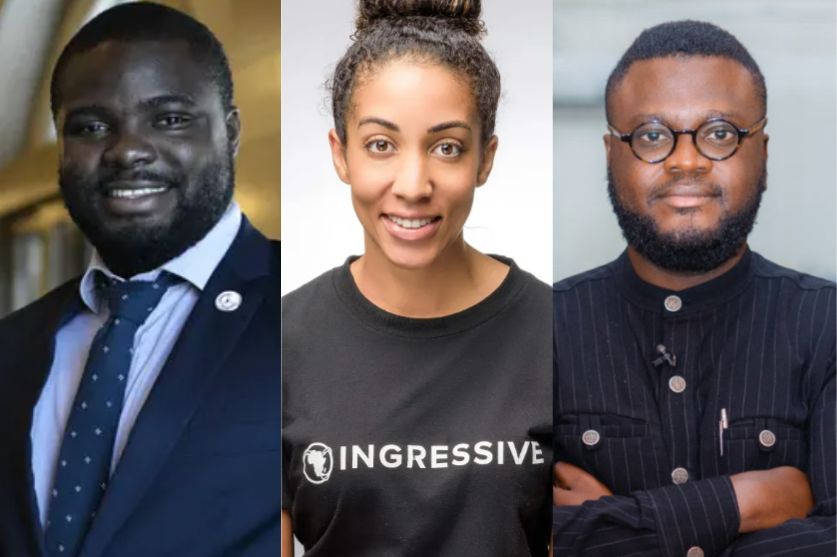
UrbanGeekz 50 2023 Honorees
Driven by the passion to pursue her dream, Horgan Famodu left her private equity job in New York to go to Nigeria and set up her own investment fund, Ingressive Capital, at just 25 years old. Although she failed in her initial bid to raise $50 million VC fund, her persistence eventually paid off.
She told Forbes in an interview, “We started leading global investors to Africa before tech was a thing here. Back when, questions were less ‘how many M&A deals have occurred in the African market this year?’ and more ‘do Africans even have internet and electricity?’ It was necessary to not only change the Africa narrative to focus on its incredible innovations and opportunities but also sell a future few imagined.”
Since launching, Ingressive VC firm has recruited top global investors and tech companies to expand into or invest in Nigeria. Her $10 million fund under Ingressive Capital has backed various promising sub-Saharan startups, including Paystack. The Fintech giant which has now been bought by Stripe was Ingressive’s first investment on the continent.
In building Ingressive Capital, Maya Horgan Famodu is the first solo, youngest black woman to launch a tech fund in the venture industry globally. Unsurprisingly, Maya was named to the 2018s Forbes’ “Under 30 Technology” list as well as “10 Inspiring Women Ruling Nigeria’s Tech Ecosystem”
Gregory Rockson was another firm believer in the power of technology to transform Africa. As a young child with a medical condition named thoracic scoliosis, he saw first-hand the frustrations of his parents in trying to secure the medicines he needed.
Africa’s healthcare system has historically been hampered by a lack of access, weak systems, poor quality of healthcare services, and a lack of good resource management. In addition, the medicine supply chain has notoriously been hindered by poor logistics, inadequate infrastructure, and a lack of inefficient middlemen. This led to medicine stockouts and as Rockson would find later out, large amounts of medicine were being thrown away due to lackluster inventory planning.
So when Rockson moved to the U.S. at 18 to attend university he initially set out to study medicine. But his desire to tackle the problems he observed as a child in his native country, Ghana, persuaded him to switch courses. In an interview with the Financial Times, Rockson said, “I became more interested in the business side of healthcare,” he says. “I realized if I became a doctor, I could treat a few patients. If I focused on how to create models to allow patients access to care, I would have the greatest impact.”
His business idea came in his final undergraduate year while watching a documentary on a third problem: substandard and fake medicines. mPharma was launched in 2013 while he was a student.
Rockson’s original idea was to create an electronic prescription system, to solve the sort of difficulty that the airline industry had faced before different carriers interlinked their booking systems. Initially, the system worked, but as he began consultations with customers, friends, and potential investors, he saw that it did not address fundamental questions about the system of deliveries to pharmacies. These problems include sprawling supply chains, low order volumes, and high prices.
In response to these, he began to change his business model, refocusing mPharma as a “pharmacy benefits manager” that would buy medicines on behalf of pharmacies (most of them in hospitals), creating greater certainty for suppliers and drug stores alike. By providing working capital and increasing the volumes of purchases, mPharma was also able to negotiate lower prices with suppliers.
So far, mPharma has raised $65 million, with operations across 110 pharmacies in Ghana, Nigeria, Zambia, and Zimbabwe, helping more than 100,000 patients to date. It is now supporting 20,000 patients a month, with drug cost savings averaging 30-60 percent.
Another firm believer who took a bet on Africa was Iyinoluwa Aboyeji. He holds the distinct honor of co-founding two of Africa’s unicorns – Andela and Flutterwave. Now he leads Future Africa as a Founding Partner.